The shoulder is one of the most complex and mobile joints in the human body. This range of motion, however, also makes it highly susceptible to injury and wear over time. For many patients, the search for a non-surgical solution leads to the field of regenerative medicine, specifically platelet-rich plasma (PRP) therapy. In this post, we’ll explore the science behind PRP and its role in treating various conditions of the shoulder. Understanding the potential of PRP in shoulder treatment can help you make an informed decision about your care.
Key Takeaways
- Platelet-rich plasma is derived from your own blood, making it an autologous treatment that harnesses your body’s natural healing mechanisms.
- PRP aims to stimulate cellular signaling and growth factors to encourage tissue repair and regeneration.
- PRP may be used to address conditions like rotator cuff tendinopathy, partial rotator cuff tears, and early-stage shoulder osteoarthritis.
- The full benefits of PRP are not immediate; it typically takes between three to six months to properly assess the treatment’s response as the body’s regenerative processes take time.
Understanding the Shoulder: A Complex Structure
The primary components of the shoulder include the humerus (upper arm bone), the scapula (shoulder blade), and the clavicle (collarbone). The rotator cuff is a group of four muscles and their tendons that surround the shoulder joint. These tendons work together to stabilize the shoulder and allow for rotation and lifting of the arm. The labrum is a ring of cartilage that lines the socket. It deepens the socket and helps keep the ball of the joint in place.
Injuries to the soft tissues, including the tendons, ligaments, and cartilage, are common. They often result from repetitive motion, sports activities, or the natural process of aging. When these tissues are damaged, they may struggle to heal on their own due to limited blood supply. This is where the concentrated healing power of PRP can potentially make a difference.
The Science Behind Platelet-Rich Plasma
Platelet-rich plasma is a form of biologic therapy. Biologics are products derived from natural sources, such as cells or growth factors, that are used to treat disease. PRP is a highly concentrated solution of platelets derived from your own blood.
How is PRP Prepared?
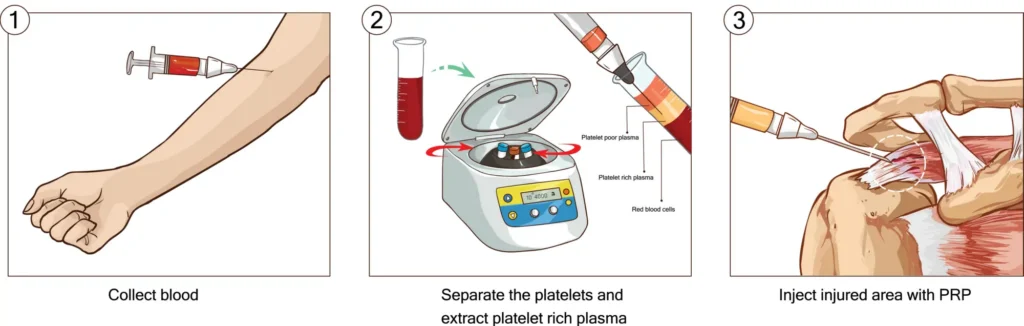
The process begins with a blood draw from a peripheral vein. The blood is then placed into a specialized device called a centrifuge. This machine spins the blood at high speeds. The spinning process separates the blood components into distinct layers. The resulting layer of plasma contains a concentration of platelets that is several times higher than what is typically found in whole blood. This is the “platelet-rich” component.

The Role of Growth Factors
Platelets are well-known for their role in blood clotting. However, they also contain hundreds of proteins called growth factors. These growth factors are important for signaling and initiating the healing cascade in the body. When PRP is injected into an injured area, these concentrated growth factors are released. They may help to stimulate cellular repair, promote the formation of new blood vessels, and encourage the body to regenerate damaged tissue.
Common Shoulder Conditions Treated with PRP
The decision to use PRP in shoulder treatment depends on the specific diagnosis and the severity of the injury. An experienced shoulder specialist can evaluate your condition and help guide if PRP is a recommended treatment for you.
Rotator Cuff Tendinopathy and Partial Tears
The rotator cuff tendons are a frequent source of shoulder pain. Overuse or repetitive strain can lead to chronic inflammation, known as tendinopathy. In some cases, this can progress to a partial rotator cuff tear. PRP may be a treatment option for these conditions. The growth factors are delivered directly to the damaged tendon fibers, which can potentially enhance the body’s natural ability to repair the tendon.
Early to Mid-Stage Shoulder Osteoarthritis
Osteoarthritis involves the breakdown of cartilage in the joint. This leads to pain, stiffness, and reduced function. For patients with early or moderate arthritis, PRP may offer a way to manage symptoms. The goal is to improve the joint environment and reduce pain.
Other Soft Tissue Injuries
PRP may also be considered for other soft tissue issues in the shoulder. These may include chronic biceps tendinopathy or certain types of labral tears that do not require surgical intervention. The minimally invasive nature of the injection makes it an attractive option for many patients.
Preparing for Your PRP Injection
Optimizing your body’s internal environment is a key step in preparing for PRP therapy. The goal is to ensure your body is in the best possible state to produce high-quality PRP and respond effectively to the treatment.
For at least one week prior to your scheduled injection, you may be advised to focus on your nutrition and metabolic state:
- Avoid Anti-Inflammatory Medications: Non-steroidal anti-inflammatory drugs (NSAIDs), such as ibuprofen (Advil, Motrin) and naproxen (Aleve), can interfere with platelet function. Patients are recommended to avoid taking these medications before the procedure.
- Eliminate Alcohol: Do not consume any alcohol during the week leading up to your treatment.
- Improve Diet: A clean, nutrient-rich diet supports the cellular health necessary for regeneration. Avoid refined sugar and processed foods.
- Maintain Activity: Keep up your usual athletic or physical activity. If you are sedentary, consider a low-impact form of exercise. Avoid movements that aggravate symptoms.
- Prioritize Rest: Getting plenty of rest allows your body to conserve energy and focus on preparation for the healing process.
The Day of the Procedure
The entire PRP procedure typically takes about one hour, performed in an outpatient setting.
- Pain Management: Your doctor’s office may prescribe pain medication to be taken before the scheduled procedure.
- Blood Draw: A member of the team will position you to allow for a peripheral blood draw.
- Centrifugation: Once the blood is obtained, the blood volume is placed in the centrifuge. The machine spins and separates the blood into its components, concentrating the desired PRP cells into a rich layer.
- Injection Preparation: The team will then reposition you to allow access to the joint or area to be injected.
- Precision Injection: The physician will deliver the PRP by injection. Ultrasound guidance is often used during this step. This imaging technology allows the physician to visualize the needle in real-time. It aids in the accurate placement of the injection to the injury site.
After Your PRP Treatment
Understanding the post-treatment phase is just as important as the preparation. The body is now beginning the healing process, and your actions can influence the outcome.
Immediate Post-Injection Care
Some degree of discomfort or pain is expected at the treatment site. This is a normal part of the inflammatory response that PRP is designed to initiate. This discomfort usually lasts for a few days to about one week. Patients can typically resume their usual activity after a few days, but strenuous activity may need to be avoided as directed.
Avoiding Anti-Inflammatories
Patients typically continue to avoid anti-inflammatory medications for two weeks after the treatment. Taking NSAIDs can counteract the healing cascade that the PRP injection is intended to start. Your doctor can recommend appropriate pain relief options that will not interfere with the treatment.
Assessing the Response
The regenerative process takes time. While some improvements may be experienced earlier, it will likely be three to six months from the time of treatment before the full response can be properly assessed.
Potential for a “Boost”
Depending on your early response to the treatment, your doctor may recommend a “boost” of treatment with a second PRP injection. This decision is made on a case-by-case basis.
Summary
Platelet-rich plasma (PRP) therapy is a minimally invasive, autologous treatment that may offer relief for certain shoulder conditions by supporting the body’s natural healing processes. The treatment involves concentrating platelets from the patient’s own blood and delivering them to the site of injury to possibly stimulate tissue repair. PRP requires proper diagnosis, preparation, and post-treatment care to optimize outcomes. Results may take several months to become noticeable. Consulting with an orthopedic specialist can help determine if PRP is an appropriate treatment for you.
Frequently Asked Questions
How long does the PRP injection procedure take?
The entire process, from the blood draw to the final injection, typically takes about one hour.
Will the injection hurt?
Some patients report a feeling of pressure or mild pain during the injection. Discomfort at the injection site is common for about a week afterward.
How soon can I return to sports or heavy lifting?
While many patients can resume light, usual activity after a few days, a return to strenuous activity or sports will be guided by your doctor. This may be a more gradual process that begins several weeks after the injection.
How many injections will I need?
Some patients experience relief after a single injection. However, depending on the severity of the condition and your body’s response, your doctor may recommend a second “boost” injection.