Medically reviewed by Veronica Diaz, MD | Reviewed July 2026
A large share of the patients I see for shoulder arthritis are women, and that isn’t a coincidence. Shoulder arthritis in women tends to develop through a somewhat different set of pathways than it does in men, and understanding why can change how you think about your own treatment options. From hormonal shifts after menopause to differences in bone density, there’s a lot that’s specific to female patients and worth knowing before your first consultation.
Key Takeaways
- Women make up a large share of shoulder arthritis and shoulder replacement patients, in part due to hormonal changes that follow menopause.
- Rotator cuff arthropathy, a type of arthritis that develops after a long-standing, untreated rotator cuff tear, appears to be more common in women.
- Bone density is an important factor in diagnosis and surgical planning, since women have statistically higher rates of osteoporosis and osteopenia.
Why Shoulder Arthritis in Women Often Has Its Own Pattern
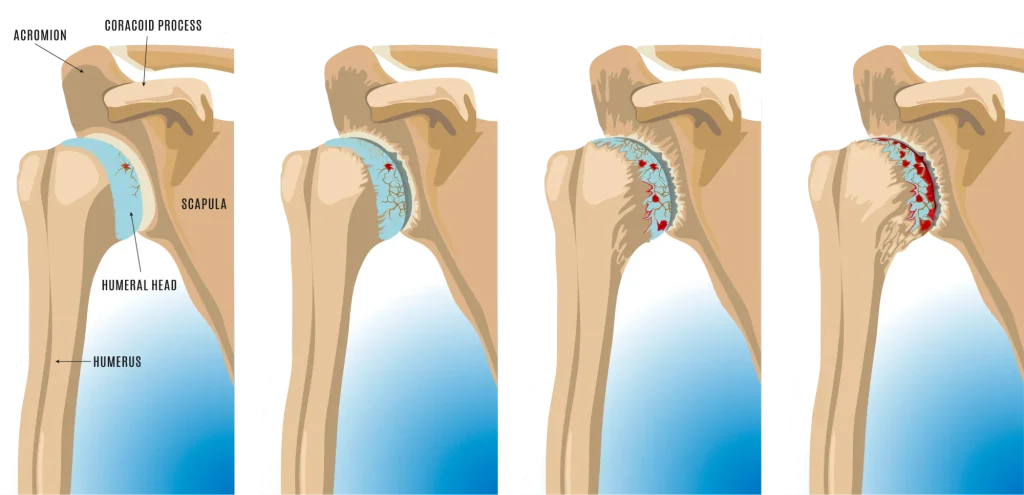
Osteoarthritis, the wear-and-tear form of arthritis, affects women disproportionately. Hormonal changes following menopause appear to accelerate the breakdown of cartilage in the shoulder joint, which is part of why women make up the majority of shoulder replacement patients nationally. Rotator cuff arthropathy is another factor worth understanding. When a large rotator cuff tear goes untreated for long enough, it can lead to progressive joint damage. Rotator cuff tears that go unaddressed don’t heal on their own, and this arthropathy pattern is one of the possible consequences.
Recognizing the Symptoms
Shoulder arthritis in women tends to show up gradually. Pain that starts with activity and eventually lingers at rest is usually the first sign, followed by stiffness that makes reaching overhead or behind the back more difficult. Some patients notice grinding or clicking with movement. Sleep is often affected too, particularly for anyone who tends to sleep on the involved side. None of these symptoms are exclusive to arthritis, which is part of why an accurate diagnosis, usually starting with a physical exam and X-rays, matters before assuming you know what’s wrong.
Shoulder arthritis doesn’t always progress at a predictable pace, and I think patients deserve to hear that directly. Some live with mild, manageable symptoms for years. Others notice a fairly steady decline in comfort and motion over a shorter period. Because the pace varies so much from person to person, I’d rather track your specific symptoms over time than apply a generic timeline to your situation.
How Shoulder Arthritis Is Diagnosed
Diagnosis usually starts with a conversation about your symptoms, how long they’ve been present, and how they’re affecting your daily activities. From there, I do a physical exam to assess strength, range of motion, and where exactly the pain is coming from, since not all shoulder pain in women turns out to be arthritis. X-rays are typically the first imaging step, since they show joint space narrowing and bone changes clearly. In some cases, particularly if there’s a question about the rotator cuff or soft tissue, an MRI may add useful information. Rheumatoid arthritis and other inflammatory conditions can also affect the shoulder, and these sometimes require additional bloodwork or a referral to rheumatology to sort out.
The Role of Bone Density
Bone quality deserves more attention than it usually gets in conversations about shoulder arthritis. Women have higher rates of osteoporosis and osteopenia than men, and this can influence both diagnosis and treatment planning. When surgery does become part of the conversation, bone density may affect which implant is used and how it’s secured. Addressing bone health proactively, sometimes through medication, diet, or supplementation, can meaningfully improve the surgical environment for patients who eventually need a shoulder replacement.
This is one reason I ask about bone health earlier in the conversation than some patients expect, even before we’re seriously discussing surgery. A history of fractures, a family history of osteoporosis, or simply being past menopause are all reasons a bone density evaluation might be worth pursuing. Knowing where you stand gives us more time to address it, rather than discovering a bone quality issue for the first time on the day surgery is being planned.
Starting With Non-Surgical Care
Surgery isn’t the first step for most patients. Activity modification, physical therapy, and anti-inflammatory medication are usually where I start. Corticosteroid injections may offer meaningful, but temporary, relief for some patients. For appropriate candidates, particularly those with earlier-stage joint changes, PRP therapy is another option worth discussing, since it uses your own blood’s growth factors to support the joint rather than jumping straight to a more invasive procedure.
How long conservative treatment makes sense really depends on the individual. Some patients get relief and never need to revisit the conversation about surgery. Others notice their symptoms creep back after each round of treatment, which is often a sign the underlying joint damage has progressed to the point where nonsurgical measures are managing symptoms rather than addressing the source. Neither outcome is a failure. It’s simply useful information that helps guide the next step.
What I See in My Patients
A pattern I notice often in my Jupiter and Palm Beach County practice: women tend to wait longer than men to come in for an evaluation. By the time many of my female patients seek care, the joint has already experienced more advanced damage, weaker surrounding muscle, and lower bone quality than if they’d come in earlier. This isn’t meant to alarm anyone. It’s meant to encourage earlier evaluation. Pain that disrupts sleep or limits daily tasks like reaching overhead or getting dressed is reason enough to be seen, and an evaluation doesn’t commit you to anything.
At the same time, some women may not manifest as many of the dramatic and eye-catching features of shoulder arthritis on X-rays as men do, such as large bone spurs, severe joint space narrowing and bone deformity. As a result, they may not be viewed as candidates for shoulder replacement, when in fact, the shoulder joint has extensive cartilage loss. Women in this category may erroneously be told that their problem isn’t advanced enough to consider surgical options.
I see many women who assume their shoulder pain is simply a normal part of getting older, or who attribute it to menopause in a general way without realizing there’s an actual, treatable joint problem underneath it. That assumption tends to delay care more than almost anything else I encounter. Shoulder pain that’s persistent, or that’s changing how you move through your day, deserves a real look rather than an assumption.
My Approach to Treatment
My philosophy starts with the least invasive option that has a reasonable chance of helping. When conservative measures no longer provide meaningful relief and imaging confirms significant joint damage, shoulder replacement surgery may become the right option. I individualize the surgical plan around each patient’s bone quality, anatomy, and goals, and for appropriate candidates, I use implant systems designed with secure fixation in mind. Whether or not surgery ends up being part of your picture, I want you to understand every option, both nonoperative and surgical, before we make a decision together.
I also spend time talking with patients about what a good outcome actually means to them. For one woman, that might be getting back to tennis. For another, it might simply be sleeping through the night without shoulder pain waking her up, or being able to fasten a bra or reach a top shelf without wincing. Those goals shape the conversation just as much as the imaging does, and being specific about what matters to you helps me build a plan around it.
Summary
Shoulder arthritis in women may follow a different path than it does in men, shaped by hormonal changes, bone density, and a tendency to wait longer before seeking care. If shoulder pain is limiting your daily life, I’d encourage you to come in sooner rather than later, particularly if bone health is a concern for you. You can reach my office at (561) 746-7686 or schedule a consultation online to start that conversation.
Frequently Asked Questions
Why is shoulder arthritis in women often diagnosed later?
Many women present for evaluation at an older age and with more advanced joint damage than men, often because early symptoms are managed or tolerated for longer before an evaluation happens. Earlier evaluation generally means more treatment options.
Does menopause really affect shoulder arthritis?
Hormonal changes following menopause appear to accelerate cartilage breakdown in the shoulder joint, which is one reason osteoarthritis and related joint damage are more common in women, particularly after this life stage.
Can shoulder arthritis be treated without surgery?
Often, yes, at least initially. Activity modification, physical therapy, anti-inflammatory medication, corticosteroid injections, and in some cases PRP can all help manage symptoms. Whether these are enough depends on how advanced the joint damage is.
What is rotator cuff arthropathy?
It’s a type of shoulder arthritis that can develop after a large, long-standing rotator cuff tear goes unrepaired. Over time, the joint mechanics change enough to cause progressive damage, and it’s one of the main reasons some patients ultimately need a reverse shoulder replacement.