Tendon problems in the shoulder are among the most common reasons patients visit a shoulder specialist. These conditions can range from mild inflammation to tears that limit how you use your arm in daily life. In this post, we will explore the most common types of tendon problems in the shoulder, discuss their causes and risk factors, review how they are typically diagnosed, and outline the treatment options that may help you get back to the activities you enjoy.
Key Takeaways
- Tendon problems in the shoulder often involve the rotator cuff and may include conditions such as tendinitis, tendinosis, and partial or full-thickness tears.
- Overuse, aging, and acute injuries are among the most common contributing factors, though individual risk can vary based on lifestyle and anatomy.
- Many patients find relief through conservative treatments like physical therapy, activity modification, and anti-inflammatory strategies.
- Surgical options may be appropriate when nonsurgical methods do not provide adequate improvement.
A Brief Look at Shoulder Tendon Anatomy
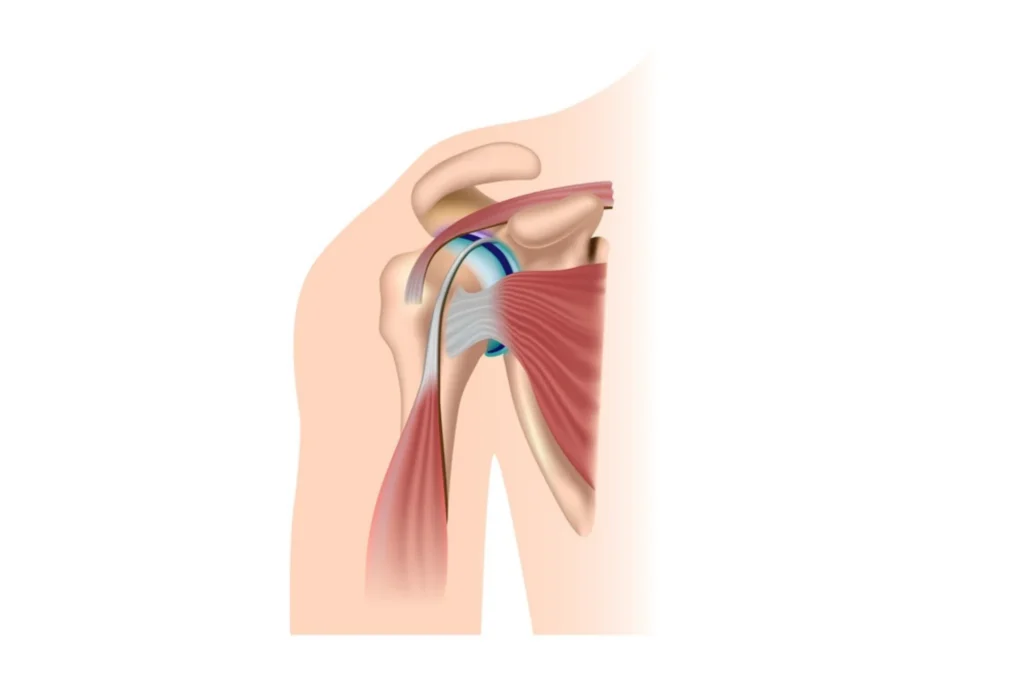
To understand tendon problems in the shoulder, it helps to know a bit about how the joint works. The shoulder is a ball-and-socket joint that relies on a group of muscles and tendons known as the rotator cuff to stay stable. Four muscles make up this group: the supraspinatus, infraspinatus, teres minor, and subscapularis. Each connects to the bone through a tendon. Together, they help you lift, rotate, and reach. The biceps tendon also plays a role. The long head of the biceps runs through the front of the shoulder joint and attaches near the top of the socket.
Common Types of Tendon Problems in the Shoulder
Rotator Cuff Tendinitis
Tendinitis traditionally refers to inflammation of a tendon. However, many cases involve a combination of inflammation and early degenerative changes within the tendon tissue. In the shoulder, it most commonly affects the supraspinatus tendon. This condition tends to develop when repetitive overhead motions irritate the tendon. Athletes who swim, throw, or play racquet sports may be particularly susceptible. People in certain occupations, such as painters, electricians, and construction workers, are at risk for it as well.
Patients with rotator cuff tendinitis typically report a dull ache in the shoulder. The pain often worsens with overhead reaching or when lying on the affected side at night. In many cases, rest and targeted exercises can help reduce symptoms over several weeks.
Rotator Cuff Tendinosis
Tendinosis differs from tendinitis in that it involves chronic degeneration of the tendon rather than acute inflammation. The tendon tissue gradually breaks down, and its collagen fibers may become disorganized. This process may happen over months or years, and patients may not notice it until the tendon becomes weakened enough to cause pain or functional limitations.
Because tendinosis develops slowly, it can be easy to dismiss early symptoms. A minor ache during certain activities might progress to more persistent discomfort. Recognizing this pattern early may help patients seek treatment before the condition worsens.
Rotator Cuff Tears
A rotator cuff tear occurs when one or more of the tendons partially or fully detach from the bone. Tears can be partial, meaning the tendon is damaged but not completely severed, or full-thickness, meaning the tendon has pulled away entirely. Some tears result from a single traumatic event, such as a fall or heavy lift. Others develop gradually as a degenerative process.
Symptoms of a rotator cuff tear may include pain in the shoulder and upper arm, weakness when lifting or rotating, and difficulty with activities like reaching behind the back. Larger tears tend to produce more significant weakness. However, the severity of symptoms does not always correspond directly to the size of the tear.
Biceps Tendinitis and Tears
The long head of the biceps tendon can become inflamed from repetitive overhead use or as a result of other shoulder conditions. Patients with biceps tendinitis commonly feel pain at the front of the shoulder. The discomfort may travel down the upper arm. In some cases, the biceps tendon can tear partially or completely. A complete rupture of the long head may produce a visible bulge in the upper arm, sometimes called a “Popeye” deformity. This injury is treated without surgery unless there is an associated rotator cuff tear, in which surgery may be recommended.
Calcific Tendinitis
Calcific tendinitis is a condition in which calcium deposits form within a rotator cuff tendon. It appears to be more common in adults between the ages of 30 and 60. The calcium deposits can cause sudden, intense pain, especially during an acute flare.
In some cases, the body reabsorbs the calcium over time, and the pain resolves on its own. When symptoms persist, treatments like physical therapy, injections, or a procedure called needle aspiration may help. Surgery is generally considered when other approaches do not provide relief.
Causes and Risk Factors
Tendon problems in the shoulder can develop for many reasons. Understanding the factors that contribute to these conditions may help patients take steps to reduce their risk or seek timely care.
Overuse and Repetitive Motion
Repetitive overhead activities place considerable strain on the shoulder tendons. This includes sports like swimming, baseball, and tennis, as well as occupations that require frequent lifting above head height. Over time, repetitive stress can cause microtrauma to the tendon fibers, which may lead to inflammation or degeneration if the tissue does not have adequate time to heal.
Aging and Degeneration
As we age, tendons naturally lose some of their elasticity and blood supply. This degenerative process can make them more susceptible to injury. Age-related changes do not mean that a tear or tendon problem is inevitable, but they do increase the likelihood.
Acute Injury
A sudden fall, a direct blow, a forceful pull or torsional force on the shoulder can tear a tendon that was previously healthy or weaken a tendon that was already showing signs of wear. Traumatic tears often cause immediate pain and a noticeable decrease in arm strength.
Impingement
Shoulder impingement refers to irritation of the rotator cuff tendons as they pass beneath the acromion (the bony ceiling of the shoulder) during arm movement. This irritation may be influenced by structural factors, tendon degeneration, muscle imbalance, or inflammation. Over time, impingement may contribute to tendinitis, tendinosis, or even rotator cuff tears.
Other Contributing Factors
Certain health conditions, including diabetes and thyroid disorders, may increase the risk of developing tendon problems. Smoking has also been associated with poor tendon health and slower healing. Additionally, genetics may play a role, as some individuals appear to be more prone to tendon degeneration than others.
How Tendon Problems Are Diagnosed
Diagnosing a shoulder tendon problem typically begins with a detailed conversation. Your doctor will likely ask about when the pain started, what activities make it worse, and whether you experienced a specific injury. A thorough examination of the shoulder follows, during which your doctor tests your shoulder’s range of motion, strength, and stability using a series of targeted maneuvers.
Imaging studies may be ordered to support the diagnosis. X-rays can reveal bone spurs, calcium deposits, or signs of arthritis that may contribute to the problem. An MRI provides detailed images of the soft tissues and may be recommended for evaluating the rotator cuff and biceps tendon. In some situations, an ultrasound may be used as a way to assess the tendons in real time.
Treatment Options
Treatment for a shoulder tendon problem depends on several factors, including the type and severity of the condition, the patient’s age and activity level, and their overall health. An experienced shoulder specialist can evaluate your condition and help guide the most appropriate treatment path.
Conservative Management
Non-surgical treatments may be effective for many tendon problems in the shoulder. A conservative approach may include the following strategies:
- Rest and activity modification to reduce strain on the affected tendon.
- Physical therapy focused on strengthening the rotator cuff and improving flexibility and posture.
- Nonsteroidal anti-inflammatory medications (NSAIDs) to help manage pain and reduce inflammation.
- Platelet-rich plasma therapy, which uses a concentration of the patient’s own growth factors to support tissue healing.
Surgical Treatment
When conservative treatments do not provide adequate relief, or when the tendon damage is severe, surgery may be the next step. The type of procedure depends on the specific condition being treated.
Shoulder arthroscopy is a commonly performed technique. During this minimally invasive procedure, the surgeon uses a tiny camera to visualize the area and perform repairs through small incisions. Arthroscopic surgery involves smaller incisions and less soft tissue disruption compared to traditional open techniques, and in some cases may allow for a shorter initial recovery period.
Tips for Supporting Shoulder Tendon Health
While not all tendon problems can be prevented, there are practical steps you can take to help support your shoulder health:
- Warm up before physical activity, especially activities involving overhead movement.
- Incorporate rotator cuff strengthening exercises into your regular fitness routine.
- Avoid repetitive overhead motions for prolonged periods without breaks.
- Maintain good posture, as slouching can contribute to shoulder impingement over time.
- Listen to your body and seek evaluation if shoulder pain persists for more than a few weeks.
Taking a proactive approach to shoulder care may help reduce your risk of developing tendon problems.
Summary
Tendon problems in the shoulder encompass a wide range of conditions, from mild inflammation to significant tears. The rotator cuff and biceps tendon are the most frequently affected structures, and the causes can include everything from repetitive use and the normal maturation process to acute injuries and impingement. A thorough evaluation by a qualified shoulder specialist is important for determining the right diagnosis and developing an effective treatment plan.
Many patients respond well to conservative treatments like physical therapy, medication, and injections. When nonsurgical options do not provide the desired improvement, surgical procedures may offer a pathway to restored function and reduced pain.
Frequently Asked Questions
How do I know if my shoulder pain is caused by a tendon problem?
Shoulder tendon issues commonly present as a dull ache that worsens with overhead activities or when lying on the affected side at night. You may also notice weakness when lifting or rotating your arm. However, because several conditions can cause shoulder pain, it is important to be evaluated for an accurate diagnosis.
Can a rotator cuff tear heal on its own without surgery?
Some partial tears and many degenerative tears can be managed successfully without surgery. Physical therapy, activity modification, and other conservative strategies may help reduce pain and improve function. However, complete tears generally do not heal on their own, and larger or more symptomatic tears may require surgical repair.
Is it possible to prevent tendon problems in the shoulder?
While you cannot eliminate all risk factors, especially age-related changes, you can take steps to reduce your chances. Regular strengthening, proper warm-ups, maintaining good posture, and avoiding prolonged repetitive overhead motions may all help. If you start to notice persistent shoulder discomfort, seeking early evaluation may reduce the risk of progression.