Trigger finger is a condition where a finger gets stuck in a bent position and may suddenly snap straight. It can occur when the tendon sheath in your finger becomes inflamed, leading to pain and difficulty with movement. In this post, we’ll explore what trigger finger is, along with its symptoms, causes, and treatment options.
Key Takeaways
- Trigger finger is a condition caused by inflammation of the flexor tendons, most commonly affecting the ring finger and thumb.
- Symptoms may include pain, stiffness, and difficulty moving the affected finger, which can interfere with daily activities.
- Treatment options range from non-surgical methods like corticosteroid injections and splinting to surgical intervention when necessary.
Understanding Trigger Finger
Trigger finger is a hand condition that affects the flexor tendons in your fingers or thumbs, causing pain and restricted movement. It typically develops when the tendon sheath thickens or swells, which prevents the tendons from gliding smoothly. These changes can create a painful catching or locking sensation, making it feel as though your finger is stuck in a trigger-like position. In some cases, however, trigger finger may present differently, with difficulty fully bending the finger rather than locking during extension.
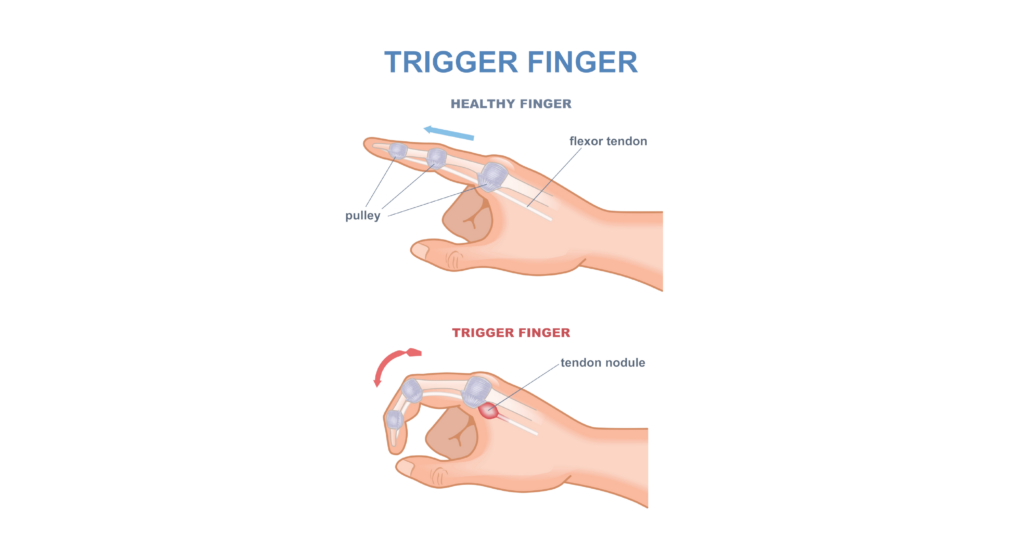
The ring finger is most commonly affected by trigger finger, followed by the thumb (sometimes referred to as trigger thumb). This condition can affect other fingers as well. Understanding this condition is the first step towards managing it effectively. In the following sections, we’ll take a closer look at trigger finger symptoms and causes.
Recognizing Trigger Finger Symptoms
Symptoms of trigger finger can vary, but the initial signs are typically noticeable. A clicking or popping sensation during finger movement may be one of the first signs, or feeling like the finger is catching on something inside the hand.
Pain is another common symptom, particularly when bending the finger or thumb towards the palm side. This pain can make everyday tasks, such as gripping objects or typing, challenging. Stiffness is also prevalent, and many individuals find it difficult to straighten their fingers without assistance. This stiffness may be most noticeable in the morning, gradually improving as the day goes on.
Early recognition of these symptoms can lead to timely medical evaluation and treatment.
Causes of Trigger Finger
The condition may develop when the tendon sheath becomes irritated, leading to inflammation and swelling that hinder smooth tendon movement.
Repetitive hand movements and prolonged gripping tasks are known risk factors. Whether it’s using tools, typing, or even gripping a steering wheel, these activities may increase your risk of developing trigger finger.
Additionally, certain health conditions like diabetes and rheumatoid arthritis are linked to a higher chance of developing trigger finger.
Diagnosing Trigger Finger
Diagnosing trigger finger typically begins with taking a detailed symptom history and performing a physical examination. During the exam, your doctor will likely look for signs such as pain during motion, clicking and locking, and nodules or thickening along the tendon.
In some cases, ultrasound imaging may be used to further assess the condition. This imaging helps visualize tendon dynamics and detect any inflammation or nodules that might be obstructing the tendon’s movement.
This comprehensive approach ensures that the treatment plan can be tailored to the specific needs and severity of the patient’s condition.
Non-Surgical Treatments for Trigger Finger
When it comes to treating trigger finger, non-surgical options are often the first line of defense. Corticosteroid injections are commonly used to help reduce inflammation and alleviate symptoms. Nonsteroidal anti-inflammatory drugs (NSAIDs) can also help manage pain and reduce swelling.
Rest and activity modifications can also be beneficial, including avoiding or modifying activities that involve repetitive bending of the affected finger. Splinting the finger to keep it straight, especially during sleep, may also support the healing process.
Patients are often recommended to perform gentle stretching exercises to improve finger movement and reduce stiffness. These exercises can be taught and guided by a hand therapist to ensure they are done correctly and safely.
Surgical Treatments for Trigger Finger
If non-surgical treatments fail to provide relief, surgery may be necessary. Trigger finger release surgery is a procedure designed to allow the tendon to glide freely. This procedure is usually performed under local anesthesia by an experienced orthopedic surgeon.
Recovery from surgery may involve some ongoing stiffness and tenderness at the surgery site. Physical therapy typically plays a key role in regaining finger motion and strength.
Many patients find relief from symptoms after trigger finger release, but it’s important to follow post-operative care instructions closely to support the best possible outcomes.
Prevention of Trigger Finger
Preventive strategies may help reduce the risk of trigger finger:
- Using adaptive tools such as padded gloves or ergonomic equipment to reduce strain on the fingers.
- Taking regular breaks and varying tasks to avoid repetitive hand stress.
- Maintaining overall hand health with regular stretching and strengthening exercises.
If trigger finger symptoms develop, it is important to listen to your body and consider seeking medical evaluation for prompt diagnosis and treatment.
Summary
In summary, trigger finger is a condition that can significantly affect activities and daily life, but it can be a manageable condition. Recognizing symptoms early, understanding risk factors, and pursuing appropriate diagnosis and treatment, whether non-surgical or surgical, are key steps in managing this condition.
Frequently Asked Questions
What are the early signs of trigger finger?
Early signs of trigger finger may include a clicking or popping sensation when moving the finger, pain during bending, and stiffness, particularly noticeable in the morning. Addressing these symptoms early can help prevent progression.
Can trigger finger heal on its own?
Some mild cases of trigger finger may improve with rest and non-surgical treatments, but many persist or worsen without treatment.
What activities should I avoid if I have trigger finger?
Patients should typically avoid repetitive gripping or bending activities, including prolonged typing, tool use, or gripping a steering wheel to help prevent aggravating trigger finger. Prioritizing rest and modifying these activities may aid in your recovery.
Is surgery the only option for advanced trigger finger?
Surgery is often considered when non-surgical treatments fail to provide adequate relief. Consulting with a hand specialist can help you determine the best treatment plan for your situation.
How long does recovery take after trigger finger surgery?
Recovery after trigger finger surgery may take several weeks to months, during which stiffness and tenderness may occur. Engaging in physical therapy is often important to help restore full motion and strength.